
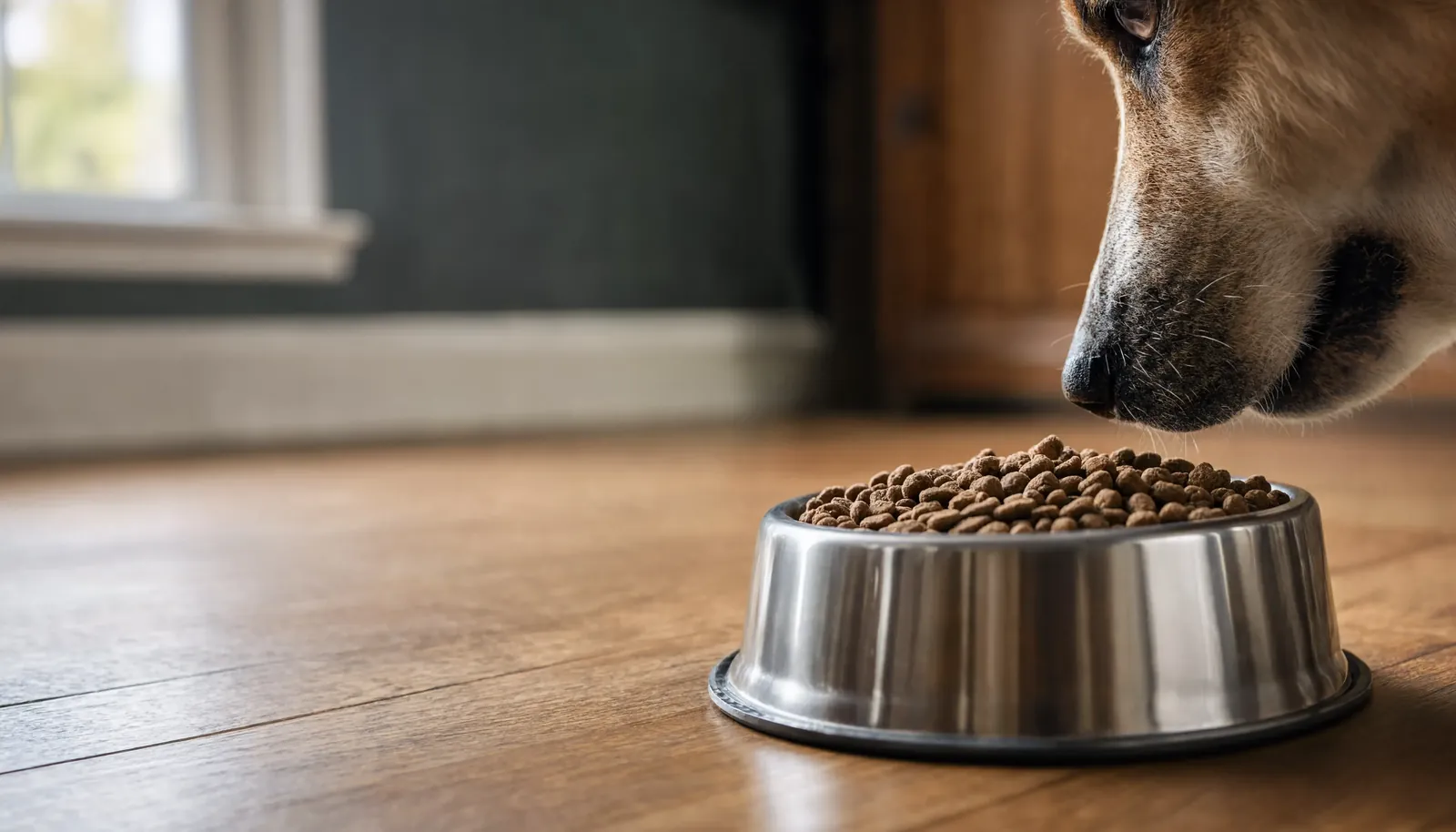
Start with age, size and activity
Puppies, adults and seniors need different amounts of energy and nutrients. A food labelled "complete" is designed to give a dog everything it needs at that life stage, so choose the stage that matches your dog first.
Size matters too. Small breeds burn energy quickly and do better with small kibble. Large breeds are often fed a food made for their size, and the pieces are easier to chew. Very active dogs usually need more calories than a dog who mostly naps.
Read the ingredient list from the top
Ingredients are listed by weight before cooking. A named meat, such as chicken or salmon, near the top tells you more than a general term like "meat and animal derivatives".
Grain-free is a preference, not a guarantee of quality. Many dogs do well on foods that contain rice or oats. If your dog has a diagnosed allergy, follow your vet's advice about what to avoid.
Worth remembering
Keep a note of the food, portion size and your dog's weight each month. It makes it much easier to see what is working.
Switch foods slowly
A sudden change often causes loose stools. Mix a little of the new food into the old one and increase the share over seven to ten days. If your dog's stomach is still unsettled after that, speak to your vet.
Feed to the guide, then adjust
The feeding guide on the pack is a starting point. Weigh out portions rather than guessing, and check your dog's body shape every few weeks. You should be able to feel the ribs under a light layer of fat.
This guide is general advice and does not replace a vet's opinion. If you are worried about your pet's health, contact your vet.